Acting for environmental sobriety
In light of the climate emergency, resource scarcity and the decline of biodiversity, urgent action is crucial. At Altarea, we are convinced that an important part of the solution lies in the cities. As leaders in low-carbon urban transformation, we are taking action across all our business lines to reduce our impact on the climate, natural resources, biodiversity and soil, and offer solutions to adapt to climate change for the well-being and health of our customers and all our stakeholders.
Optimise our climate and resource footprint
In France, 67%1 of greenhouse gas emissions come from cities. And 43%2 of energy consumption is attributable to the building sector, far more than transport. As a major player in the French real estate sector, Altarea has both a strong responsibility and the ability to shake things up and take low-carbon real estate to another level.
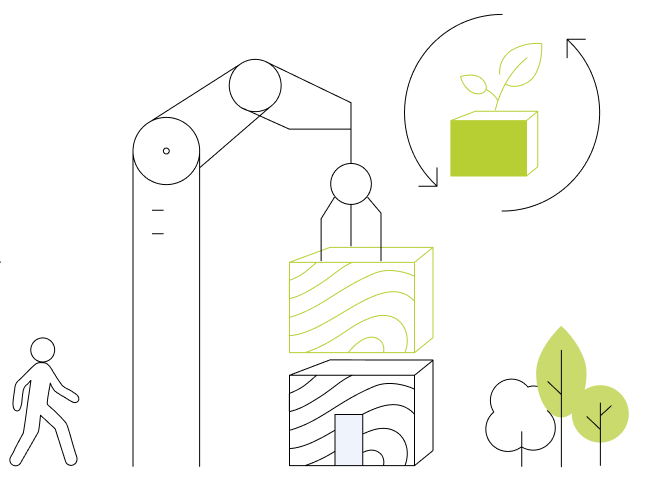
To achieve this, we act in a complementary manner on four levers. First, in all its activities, Altarea is striving to lead the way by systematically using low-carbon materials, particularly wood. In addition, the Group is implementing a range of efficient solutions to consume less energy and consume better, such as optimising the energy performance of housing, using bioclimatic building design or developing the use of renewable energies. Another lever: Altarea applies the principles of the circular economy throughout the building’s life cycle, from design to end of life, including construction and operation. Lastly, Altarea is adapting its various projects to make them more resilient to the effects of climate change.
¹ Source: The Climate Challenge of Cities, WWF report, 2018
² Source: French Ministry for the Ecological Transition, 2022
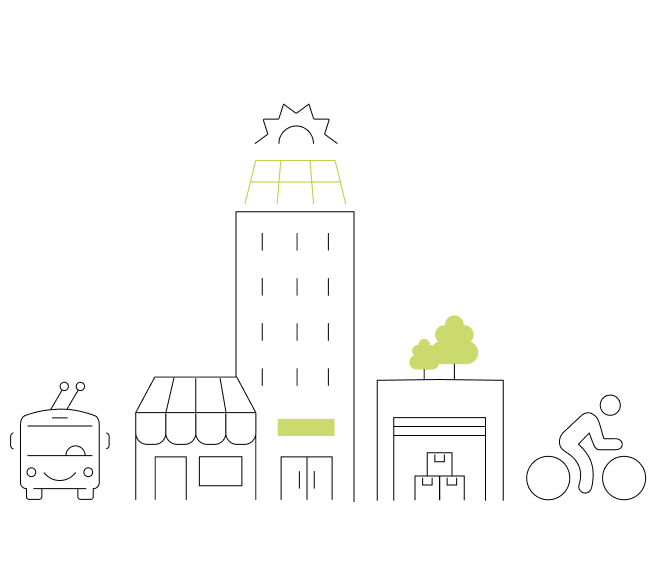
Our levers for a sustainable city
2. Nature in the city
3. Reversibility
4. New energies
6. Choice of materials
7. Reduction and/or recovery of waste
9. Neighbourhood mix
10. Energy efficiency of buildings
12. (re) Conversion of buildings
- Soil permeability
- Nature in the city
- Reversibility
- New energies
5. Re-use of materials
6. Choice of materials
7. Reduction and/or recovery of waste
8. Proximity and/or recovery of waste
9. Neighbourhood mix
10. Energy consumption of buildings
11. Renovation
12. (re) Conversion of buildings
Stellata Residence in Rueil Malmaison, developed by Woodeum.
This is the first new construction in France with a solid wood structure featuring low-carbon steel balconies.
Preserve ecosystems and soils
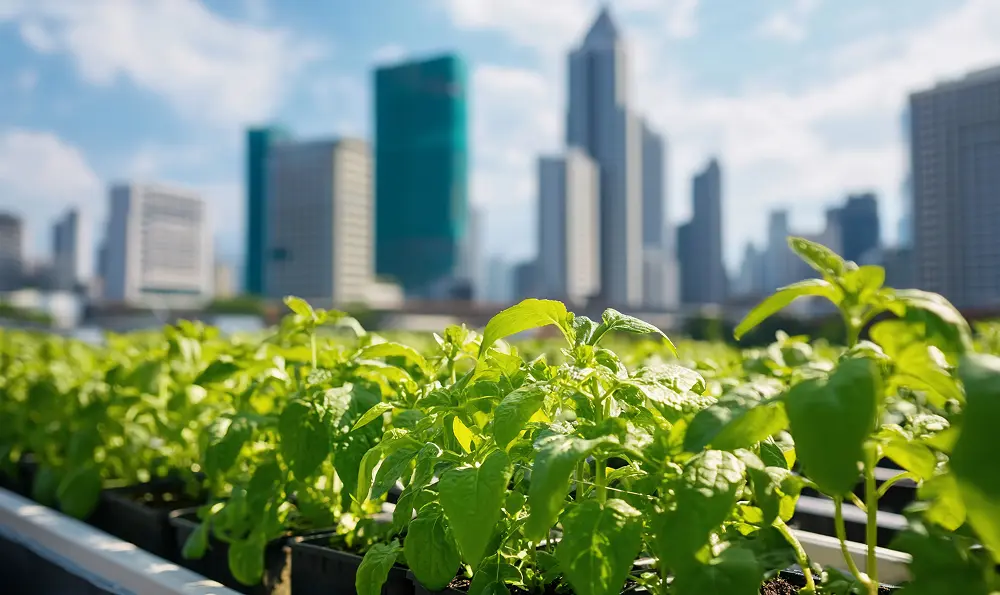
Combating urban sprawl and the artificialisation of soil and protecting biodiversity, including in the city, are big issues for local communities.
The Group strives to reduce the impact of its activities on soil as much as possible. For several years, we have sought to “build the city on the city”, by developing expertise in renovation and restructuring, by anticipating the future needs of users by creating flexible or modular buildings and by deartificialising certain soils by creating open-ground green spaces at the heart of the projects.
Another priority for Altarea: protecting and restoring biodiversity.
Across all our activities, we are committed to preserving existing biodiversity wherever possible and to developing high quality green spaces.
Domaine des Bas Buisson developed by Histoire & Patrimoine in Dreux.
Rehabilitation of the former sanatorium listed as a Historic Monument to create 228 housing units.